Machine learning to detect carbon molecules in space – and pollution on earth
24 June 2026
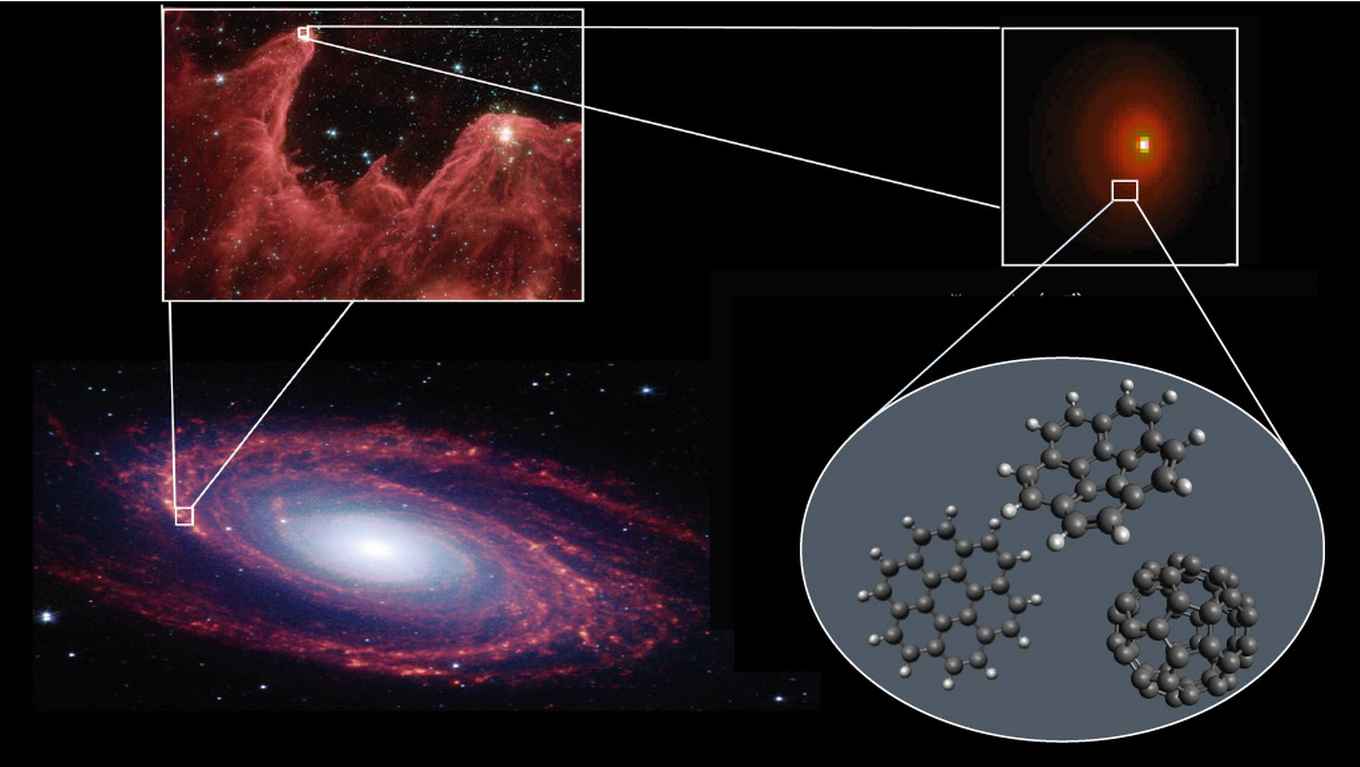
Carbon is an essential element for life on Earth, forming the backbone of all organic molecules. It is also one of the most abundant elements in space. Around 20% of carbon in space exists in the form of Polycyclic Aromatic Hydrocarbons (PAHs). These are a class of molecules that consist of fused rings of carbon atoms.
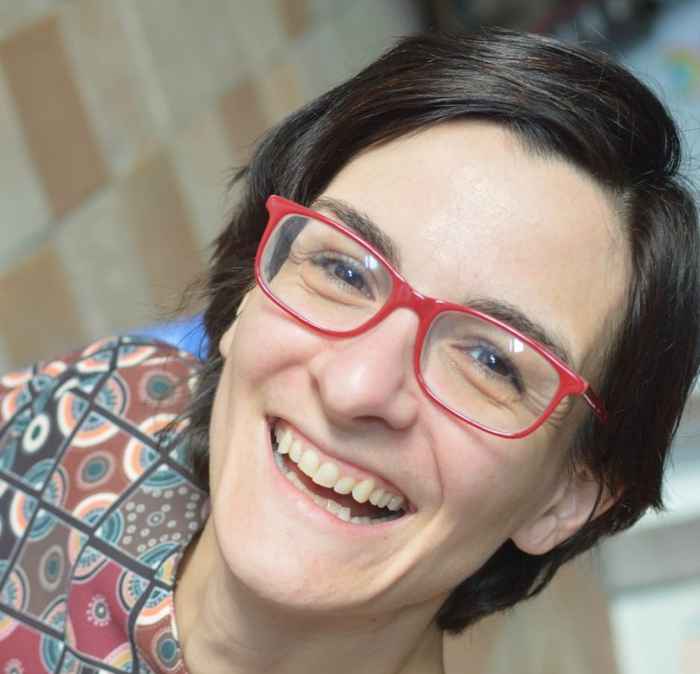
PAHs have been found almost everywhere in space, including regions where stars and planets form. They might even have played a role in the origin of life on Earth. This is why Alessandra Candian, UvA assistant professor in Astrochemistry, is investigating these molecules: ‘In my research, I'm trying to dive deep into these PAHs, investigating how they form and evolve, and if they can end up on a planet naturally.’
However, not all types of PAHs in space can currently be identified. In a new MMD TechHub project, Candian works together with Wybren Jan Buma, professor of Molecular Spectroscopy, and Daniela Huppenkothen, assistant professor Astronomy and Data Science. They will use machine learning to predict the infrared spectra of large PAHs to aid their detection in space. They will also investigate the use of this method for environmental research, since PAHs are a source of pollution on Earth.
Distinguishing large molecules
Thanks to increasingly sophisticated infrastructure, such as the James Webb Space Telescope, astronomers now have more opportunities to study carbon molecules in space. Recently, researchers from the Dutch Astrochemistry Network found a way to calculate PAH infrared spectra with high precision. However, for large PAH molecules, the computational time is too long.
To address this, the UvA researchers want to use machine learning to predict the infrared spectrum of PAH molecules based on their shape. Candian explains: ‘We will use an existing database of spectra for small PAHs and try to map their shape and size to their spectroscopic properties using machine learning. We can then use this to predict the spectra of larger molecules.’ They will verify these predictions in the lab.
Versatile molecules
PAH molecules play many important roles on Earth as well. Some PAHs are a byproduct of incomplete combustion, which occurs when fuel burns in a limited supply of oxygen. For example, the charred crust on barbequed meat can contain PAHs. These molecules are carcinogenic and a source of air pollution, so environmental chemists could use spectral information from this research project to trace PAHs in the environment.
PAHs are also used as a base to make OLEDs in digital displays. The largest PAH-like molecule detected in space, the non-carcinogenic 3D fullerene, could even be applied in medicine as a carrier to encapsulate drugs. This makes it possible to transport drugs to a specific part of the body to treat a disease. Studying PAHs may therefore lead to surprising new insights in these research areas.
Patience and collaboration
Therefore, it is important to keep track of applications in fields beyond astronomy. Candian: ‘If you want to do interdisciplinary research, you need to develop a specific mindset.’ Collaborations across disciplines can be challenging at first, because researchers often “speak different languages”. It takes time to build trust and establish a shared understanding. Once that foundation is in place, however, researchers can achieve far more together, Candian notes.
The impact of astronomy research is large, but it is not always clear from the start, according to Candian. ‘I think in the case of astronomy research, it is matter of patience. With more applied research, you often address a specific problem and get an expected result. For astronomy, it may take longer, but the impact could be larger. Where will we now be without GPS?’
Preserving what you have
Looking ahead, Candian hopes to be able to identify a specific PAH molecule and trace its lifecycle across the cosmos. This could offer new insights into the evolution of carbon molecules and how they may end up in biological life.
She's also eager to talk to environmental scientists to explore other applications of their method beyond astronomy. ‘When you do astronomy research, you look very far away,’ says Candian. ‘But sometimes that makes you think about your own planet, and you end up reflecting on how lucky you are and how you want to preserve what you have.’